Search Results
Search this site
8587 results found with an empty search
- Aljamain Sterling: The Funkmaster Dominates Vegas 116
Twelve years. That is how long Aljamain Sterling has been grinding in the deepest waters of the UFC. Think about that. Most careers are flashes in the pan. A quick spark, a couple of knockouts, and then a quiet exit. Not Sterling. On April 25, 2026, at UFC Vegas 116, the "Funkmaster" proved he isn't just hanging around: he’s evolving. He didn't just beat Youssef Zalal. He dismantled him. In a performance that looked more like a masterclass than a fistfight, Sterling walked away with a unanimous decision victory that left no room for debate. The scorecards were a brutal reflection of the reality inside the cage: 49-45 across the board. If you were looking for a competitive back-and-forth, you tuned into the wrong channel. This was a veteran taking a rising prospect to school and failing him on every single test. Aljamain Sterling: Smothering the Hype Youssef Zalal came into this fight with momentum. He’s dangerous, he’s fast, and he’s hungry. But hunger doesn't mean much when you're trapped in the "Funkmaster’s" web. From the opening bell, Sterling’s pressure was relentless. It wasn't just about the takedowns: though they were there: it was about the positional dominance. Sterling’s grappling is a puzzle that most fighters can’t solve even with a manual. He sticks to opponents like a shadow. Every time Zalal tried to create space, Aljo was there. Every time Zalal tried to find his rhythm, Aljo broke it. It was a suffocating display of high-level MMA. By the middle of the second round, you could see the frustration on Zalal’s face. He was fighting a ghost he couldn't hit and a wrestler he couldn't shake. The 49-45 scorecards indicate at least one 10-8 round in there, and it felt like it. Sterling wasn't just scoring points; he was imposing his will. This is the version of Aljamain Sterling that makes the featherweight division look over its shoulder. The Featherweight Resurrection Let’s talk about the move to 145 pounds. When Aljo left the bantamweight division, the critics were loud. They said he’d be too small. They said the power wouldn't translate. They said he was past his prime. Fast forward to today. Sterling is now 3-1 at featherweight. He’s not just a visitor in this weight class anymore. He’s a resident. And a high-rent one at that. His only loss in the division was a razor-thin split to Movsar Evloev: a fight many people still think Aljo won. Beyond that? Pure dominance. He’s found a home at featherweight where the weight cut doesn't drain his soul, and his gas tank looks better than ever. If you want to track his journey or see who's next on the chopping block, keep an eye on our fighters section. The landscape is changing fast, and Aljo is the one shifting the tectonic plates. Twelve Years of Grit You don't survive twelve years in the UFC by accident. You do it with grit. You do it by being the hardest worker in the room when the cameras aren't rolling. Aljamain Sterling is a bridge between eras. He’s seen the legends come and go, and yet, here he is, still main-eventing, still winning, and still calling his shots. This win at Vegas 116 was a statement of longevity. It was a reminder that while the sport moves at light speed, fundamentals and "Funk" are timeless. He didn't need a flashy spinning back-fist to win. He used his brain. He used his experience. He used the 12 years of scars and lessons to outpoint a younger, faster man. The Callout: Give Him the Gold Aljo isn't here to be a gatekeeper. He’s not here to help prospects build their resumes. He’s here for one thing: a second belt. In the post-fight interview, the message was clear. Aljo wants the elite. He specifically mentioned Alexander Volkanovski and Movsar Evloev. A rematch with Evloev? That’s the "revenge" narrative the fans are dying for. Their first fight was a tactical chess match that left many wanting more. A five-round main event between those two would be a grappling fan's dream. It’s the kind of high-stakes drama we live for here at FIGHT.TV. Then there’s Volkanovski. The GOAT of the featherweight division. For Sterling, a fight with Volk is the ultimate legacy play. If he beats Volk, the "greatest of all time" conversations for Aljo start becoming a lot more serious. He’s already a former champion. He’s already a 12-year vet. Adding a win over Volkanovski to that resume? That’s Hall of Fame territory. Why We Watch Combat sports are about more than just punches. They are about the human spirit. Seeing a veteran like Sterling continue to defy the odds and beat back the new generation is why we tune in. It’s the "science" meeting the "chaos." Sterling’s performance was clinical. It was a reminder that at the highest level, the smartest fighter usually wins. He didn't get lured into a brawl. He didn't make mistakes. He stayed composed, stayed focused, and stayed dominant. If you missed the live action, you can catch up on all the highlights and full replays over at our MMA live streams. Don't let the next big moment pass you by while you're scrolling through social media. Get the real deal. The Next Move The UFC matchmaking team has a tough job ahead. Sterling has made himself undeniable. You can't look at a 3-1 record at featherweight with a win this dominant and tell him he needs "one more." He’s ready now. Whether it’s the rematch with Evloev to settle the score or a showdown with Volkanovski to crown a new king, Aljamain Sterling has earned his seat at the table. He’s hitting buttons like a champ, and he’s claiming his moment. The "Funkmaster" era isn't over. It just changed weight classes. Stay locked into FIGHT.TV/news for the latest updates on Aljo’s next fight. We’ll be there cageside when the contract is signed. The featherweight division is on notice. The vet is still hungry, the "Funk" is still real, and the title is the only goal left. A veteran's masterclass. A prospect silenced. A champion's ambition. Aljamain Sterling is back. And he’s coming for everything.
- Andrii 'Rampage' Novytskyi: The Heavyweight Machine is 16-0!
Last night at Thunder Studios, the air felt different. It was heavy. It was tense. And by the end of the fourth round, it was filled with the sound of a body hitting the canvas. Andrii "Rampage" Novytskyi just reminded the world why he is the most dangerous prospect in the heavyweight division. He didn’t just win; he dismantled Alexander Flores. He didn’t just improve his record; he sent a message to every ranked heavyweight sitting comfortably on their couch. With a brutal fourth-round knockout on April 24, 2026, Novytskyi officially moved to 16-0. Twelve of those wins have ended early. If you haven’t tuned into a live boxing stream to see this man work, you’re officially behind the curve. Andrii: The Thunder Studios Takeover Alexander Flores isn’t a pushover. He’s a veteran who has been in the ring with some serious names. But against "Rampage," he looked like a man trying to stop a tidal wave with a bucket. From the opening bell, Novytskyi established the distance. Standing at 6'6", the Ukrainian giant used his jab like a piston, snapping Flores’ head back every time he tried to get inside. It wasn’t just power; it was surgical. By the middle of the second round, Flores was already showing signs of wear. The body shots were digging in. The momentum was shifting. By the fourth, it was over. Novytskyi cornered Flores, uncorked a massive right hand that landed flush, and that was that. The ref didn't even need to finish the count. Lights out. Game over. Why "Rampage" is Different In an era where heavyweights fight once every eighteen months if we’re lucky, Andrii Novytskyi is a throwback. This man is a machine. Since turning pro in early 2023, he has stepped into the ring 16 times. Think about that. That’s an average of one fight every two months. Most heavyweights spend three months just talking about fighting. Novytskyi spends that time collecting checks and adding names to his casualty list. This kind of activity is exactly what the sport needs. Fans want to see the rise. They want to see the journey. When you watch boxing online, you want to see a fighter who actually likes to fight. Novytskyi doesn't just want the belt; he wants the experience. He’s building his craft in real-time, under the bright lights, while others are hiding in training camps. The Ukrainian Pedigree and Egis Klimas It’s no coincidence that Novytskyi looks like a world-beater. He’s coming from the legendary Ukrainian school of boxing: the same system that produced Usyk and Lomachenko. But he’s got that raw heavyweight power that makes him a different kind of animal. Managing this beast is none other than Egis Klimas. If you know boxing, you know that name. Klimas is the architect behind some of the greatest careers in modern history. He doesn’t sign "maybes." He signs "will-bes." The partnership between Klimas and Novytskyi is a signal to the rest of the heavyweight division: the takeover is planned, calculated, and inevitable. They aren't rushing, but they aren't waiting either. With 16 wins under his belt in such a short window, the "prospect" tag is starting to feel a bit too small. He's a contender. Plain and simple. The Heavyweight Landscape in 2026 The heavyweight division is currently a shark tank. You’ve got the established legends holding onto their spots, and you’ve got a hungry group of young killers looking to tear them down. Novytskyi is at the front of that line. What makes him special? Engine: He doesn't gas out. He maintains the same terrifying pace from round one to round ten. Precision: He isn't a "swing and pray" heavyweight. Every shot has a purpose. Grit: You can see it in his eyes. He enjoys the struggle. Whether you’re looking for a combat sports streaming experience that delivers high-level technicality or just raw, unadulterated power, Novytskyi is your guy. He bridges the gap between the "sweet science" and the "hurt business." Hitting Buttons Like a Champ: Join the FIGHT.TV Movement Look, we know you have choices when it comes to where you spend your time. But if you're a real fan, you know that FIGHT.TV is where the heart of the sport lives. We don't just show the big pay-per-views; we show the grinders. The ones who are in the gym at 5 AM. The ones like Novytskyi who are fighting 16 times in three years to prove they belong. We’re more than just a live boxing stream. We’re the home of the next generation. Whether it’s MMA, Kickboxing, or the Heavyweight giants of boxing, we’ve got your front-row seat ready. Don't wait for the mainstream media to tell you who the next star is. Claim your moment. Watch the rise as it happens. What’s Next for Andrii Novytskyi? After a performance like that against Flores, the phone is going to be ringing off the hook. Klimas will likely look for a step-up in competition: perhaps a top-15 ranked opponent to truly test the 16-0 record. There are whispers of a possible appearance on a major undercard in the Middle East, or perhaps a homecoming fight in Ukraine if the situation allows. Regardless of where it happens, one thing is certain: people will be watching. Novytskyi is a star in the making. He has the look, the power, and the work ethic. He isn't interested in the politics of boxing. He isn't interested in Twitter beef. He’s interested in knockouts. A star is born. A contender humbled. The "Rampage" continues. Stay Tuned Want to make sure you don't miss the next time Novytskyi steps into the ring? Make sure you're following our news section for all the latest updates, fight announcements, and exclusive interviews. The heavyweight division is officially on notice. The machine is 16-0, and he’s just getting started. If you’re not with us, you’re against us. See you at the next bell. Ready to watch the best in combat sports? Check out our plans and pricing and get access to the most comprehensive fight library in the world. From the archives to the live events, we are FIGHT.TV. Simple. Raw. Real.
- Artemis Eaton: Four-Time State Champ and Still Undefeated
Artemis Eaton is a name you need to memorize. Right now. In the world of combat sports, "perfect" is a heavy word. It’s a target on your back. It’s a ghost that haunts every training session. But for North Forsyth’s Artemis Eaton, perfection isn't a goal. It’s just the reality. She recently walked off the mat at the Clayton County Convocation Center having done something most athletes only dream of. Four years. Four titles. Zero losses. She didn't just win; she dominated. Competing in the Girls 130-pound division, Eaton finished her high school career without ever tasting defeat against another female wrestler. That is not just talent. That is a systematic dismantling of the competition. The Final Masterclass The final match was supposed to be a test. Facing off against Adison Steadman of Heritage, the stakes couldn't have been higher. The crowd was electric, the air thick with the kind of tension you only find in championship finals. But Eaton doesn’t do tension. She does results. She stepped onto that mat with the calm of a veteran and the hunger of a prospect. It didn’t take long. A flurry of movement, a display of superior technical grappling, and then the pin. Just like that, the referee’s hand hit the mat. The streak was preserved. The legacy was sealed. Eaton didn't just win a match; she closed a chapter on one of the most historic runs in Georgia high school wrestling history. She joined an elite group, including Greta Garbuzovas and Elle Kaufmann, as the first girls to ever secure four straight championships. Artemis Eaton: The Blueprint of a Champion What makes Artemis Eaton different? It’s the grit. You don't go undefeated for four years on luck. You do it by being the first person in the gym and the last one to leave. You do it by perfecting the "science" of the sport while embracing the "chaos" of the mat. Her wrestling style is a blend of relentless pressure and surgical precision. She waits for the mistake, and when it happens, she ends the night. It’s the kind of performance that makes scouts in the MMA and pro wrestling worlds sit up and take notice. When we look for mma news and results, we’re looking for this kind of DNA. The kind that refuses to lose. From the Mat to the Pro Ranks? The question now is: what’s next? When you’ve conquered everything at the high school level, the world starts looking a lot bigger. There is a massive future ahead for Eaton. Whether she chooses the collegiate route or looks toward the professional ranks, she is a blue-chip prospect. Her background in wrestling provides the perfect foundation for a transition into mixed martial arts. Look at the greats. Look at the fighters who transitioned from the mat to the cage and changed the game. Eaton has that same aura. She has the mental toughness to handle the bright lights of a major promotion. We’ve seen athletes like "Queen of Pain" Oliviera and "Silent Storm" Akari dominate through sheer technical superiority and will. Eaton is cut from that same cloth. Imagine her under the lights of a major combat sports streaming event. The walkout. The focus. The inevitable victory. It’s a script that writes itself. The Evolution of Women's Combat Sports The rise of Artemis Eaton isn't just a personal victory; it’s a sign of the times. Women’s wrestling is exploding. The level of technique, the depth of the talent pool, and the sheer physicality of the matches are at an all-time high. At FIGHT.TV, we see this evolution every day. We see the shift in how fans engage with the sport. They aren't just looking for spectacle; they are looking for the "human element." They want to see the hunger. They want to see the streak. Eaton provides all of that and more. She represents a new era of athletes who are as comfortable in the spotlight as they are in the trenches of a grueling practice. Success like this creates a ripple effect. Every girl in Georgia who picks up a singlet now has a roadmap. They know it’s possible to be untouchable. They know it’s possible to be a four-time champ. Claiming the Moment Eaton’s journey reminds us why we love this business. It’s about the "grit" and the "legacy." It’s about those moments where everything is on the line and you either rise or you crumble. Artemis Eaton didn’t just rise: she soared. As she moves into the next phase of her career, the combat sports world will be watching. Whether it’s in a collegiate arena or eventually inside a cage, the expectations are through the roof. But if the last four years have taught us anything, it’s that Eaton thrives under pressure. She doesn't just meet expectations; she shatters them. For those of you looking to keep up with the next generation of killers, stay locked into our dynamic fighters section. The future is being written right now on mats across the country, and Artemis Eaton is holding the pen. The Verdict A star is born. A division humbled. Artemis Eaton finished her high school career exactly how she started it: winning. 130 pounds of pure, unadulterated dominance. She is the blueprint for what the next generation of female combat athletes should look like. Strong. Technical. Undefeated. Keep your eyes on the mma news and results. Her name is going to be all over them soon enough. The transition is coming. The pro ranks are waiting. And if her past is any indication of her future, nobody is safe. History isn't just something you read about. It’s something you pin to the mat. Stay tuned to FIGHT.TV for the best in combat sports streaming and all the updates on rising stars like Eaton. The fight is just beginning.
- Chávez Jr. Returns: "Son of the Legend" Headlines in Reynosa Against Unbeaten Caicedo
Chávez Jr. Returns: "Son of the Legend" The comeback trail continues for former WBC middleweight champion Julio César Chávez Jr. The 2011 titleholder is officially set for his second outing of the year, stepping back into the squared circle to face undefeated Colombian heavyweight prospect John Caicedo. The 10-round clash will headline a card in Reynosa, Tamaulipas, broadcast live across Mexico on TV Azteca. The undercard promises fireworks of its own, featuring a battle of "0s" between José Hernández Olimón (14-0) and Fernando Quiñonez López (9-0), as well as a crossroads match between Héctor Escobar (18-2) and Yonathan Padilla (19-8-1). Chávez Jr.: Redemption or Reality? Now 39, the Culiacán native looks to build momentum in 2026 following a fourth-round stoppage of Argentina’s Ángel Julián Sacco in San Luis Potosí earlier this year. It has been a rocky road for "Junior," who just last June dropped a unanimous decision to YouTuber-turned-prizefighter Jake Paul (12-2) in Anaheim. The shadow of his father’s legendary status has often loomed large over a career increasingly defined by headlines outside the ring. In recent years, Chávez Jr.’s boxing journey has been sidetracked by highly publicized struggles with substance abuse—controversies that have frequently tarnished his sporting legacy. Activity has been the veteran’s primary enemy. Chávez Jr. (55-7-1, 35 KOs) has donned the gloves only three times since 2022. Following a 2021 victory over David Zegarra, he vanished from the scene for nearly three years before resurfacing in July 2024 to outpoint Uriah Hall in the States. The Challenger: John Caicedo’s Big Break Across the ring stands John Javier Caicedo Obregón. A former standout for the Colombian national team, the Tuluá native ends a nearly two-year layoff for the biggest opportunity of his professional life. This marks Caicedo’s first foray outside his home soil as a pro. He was last seen in the ring in July 2024, an outing that ended abruptly via technical stoppage due to an accidental injury involving opponent Maicol Hoyos. At 26, Caicedo (6-0, 4 KOs) enters as the underdog, but he possesses the physical tools and amateur pedigree to play spoiler. While facing a name as massive as Chávez Jr. on an influential stage is a daunting task, Caicedo’s reach and natural power give him a live underdog’s chance to score a career-defining upset. If you enjoyed this article be sure to sign up for free on FIGHT.TV to get all the latest and greatest news!
- The Predator Returns: Francis Ngannou Set for MMA Comeback on Netflix
The heavyweight landscape just got hit with a tectonic shift. Francis Ngannou is back. On May 16, 2026, the combat sports world will stop. The Intuit Dome in Los Angeles will be the ground zero for a return that many thought would never happen inside a cage. "The Predator" is officially stepping back into the MMA arena, but he isn’t doing it in a ring you’d expect. He’s doing it on Netflix. This isn't just a fight. It’s a takeover. Ngannou is set to face off against former UFC heavyweight Philipe Lins in a five-round co-main event that promises pure violence. This massive showdown is part of Jake Paul’s Most Valuable Promotions (MVP) card, anchored by the legendary clash between Ronda Rousey and Gina Carano. The stakes are sky-high. The platform is global. The power is back in the hands of the fighter. The Netflix Revolution The broadcast world is changing. We’ve seen the shift coming, but this is the final hammer blow. Netflix isn't just for documentaries and binge-watching series anymore. They are coming for the live sports crown, and they are starting with the heaviest hitters in the business. After a successful run with boxing events, including a dominant performance by Tyson Fury on the platform, the streaming giant is moving into the octagon. This is the first time the red "N" will host a major MMA card, and putting Ngannou in the co-main slot is a stroke of genius. For fans, this means no more expensive pay-per-view barriers. It’s accessible. It’s immediate. It’s the future of how we consume the "sweet science" of the cage. If you’re getting ready for the watch party, make sure your gear is as ready as the fighters. Grab a Cage Ready Performance Tee and get comfortable. This is going to be a long night. The Opponent: Philipe Lins Let’s talk about the man standing across from the most feared puncher on the planet. Philipe Lins is no pushover. He’s a veteran of the UFC and the PFL, a man who knows exactly what it takes to survive in the deep end of the heavyweight division. Lins is a technician. He has the wrestling pedigree and the heavy hands to make things interesting. But against Ngannou? That’s a different kind of math. Ngannou doesn’t just beat people; he breaks them. He’s a crossover athlete who proved he could hang with the best in the boxing world, and now he’s bringing that refined striking back to his home turf. Expect Lins to try and close the distance. He’ll want to grapple. He’ll want to sap the energy of the giant. But one mistake: one inch of space: and it’s over. Ngannou’s power is the ultimate equalizer. It’s a five-round fight, but nobody expects it to see the judges' scorecards. Francis Ngannou: The Power of the Free Agent The biggest story here isn't just the fight itself. It’s how it came to be. Ngannou’s journey over the last two years has been a masterclass in self-belief and business acumen. He walked away from the UFC as the champion. He signed a historic deal with the PFL. Now, he’s parted ways with them to headline a Netflix card. Ngannou is the ultimate free agent. He’s been vocal about fighters needing to "have the balls" to take control of their own destinies. He didn't wait for a promoter to tell him what he was worth. He showed them. "Silence shouldn't be mistaken for absence," Ngannou said in a recent statement. "It's the sound of a predator closing the distance." He’s evolving. He’s not just a brawler anymore. He’s a brand. He’s a movement. By stepping onto this MVP card, he’s aligning himself with the new guard of combat sports: the disruptors like Jake Paul who are forcing the old-school promoters to sweat. Why This Comeback Matters The last time we saw Ngannou in an MMA fight was October 2024. Since then, the division has shifted, but the aura around "The Predator" has only grown. His boxing matches against Fury and Joshua showed a man who is fearless, willing to step into the fire to prove he belongs. Returning to MMA allows him to use his full arsenal. The kicks. The knees. The devastating ground and pound. If you’re training to mirror that kind of dominance, you need the right tools. Check out our Impact MMA Gloves to keep your hands protected while you’re putting in the work. This fight serves as a bridge. It connects the traditional MMA world with the high-octane entertainment world of MVP. It’s a celebration of combat. It’s a reminder that at the end of the day, fans want to see the best athletes on the biggest stages. The Underdeck: Rousey vs. Carano While Ngannou is the heavy-hitting draw, we can’t ignore the main event. Ronda Rousey and Gina Carano. The two women who built the foundation for female combat sports are finally settling the score. It’s a night of legacies. Ngannou’s role as the co-main event provides the perfect bridge. You get the technical, historical importance of Rousey and Carano, followed (or preceded) by the raw, unadulterated power of the heavyweight division. It’s a balanced meal of violence. If you want to remember this night forever, grab the Fight Night Commemorative Poster. This is history in the making. You’ll want to show people where you were when Netflix took over MMA. Training for Greatness Ngannou’s return has sparked a massive interest in heavyweight training. Everyone wants to know how a man that big moves that fast. It’s about more than just lifting weights. It’s about grit. It’s about the mental toughness to endure a layoff and come back even stronger. At FIGHT.TV, we see the hunger in the gym every day. Whether you’re a pro or just starting out, the mindset is the same: stay ready. For those cold morning runs or late-night sessions, stay warm with the Cold Front Knit Beanie. Ngannou’s camp has been quiet, but the footage leaking out shows a man who hasn't lost a step. He’s lean. He’s explosive. And he looks like a man who has something to prove to the doubters who thought his best days were behind him. The Business of Being Francis Let’s look at the numbers. By moving to Netflix, Ngannou is tapping into a subscriber base of over 260 million people. That is a reach that no traditional PPV could ever hope to touch. This is about visibility. This is about becoming a household name in a way that goes beyond the "fight bubble." His exit from the PFL was a shock to many, but Ngannou has always been about the long game. He’s building an empire. By partnering with MVP, he’s proving that he doesn't need a traditional league structure to be the biggest star in the room. He is the league. For other fighters watching this, the message is clear: the cage is just the beginning. The world is much bigger. What to Expect on May 16 Expect fire. The Intuit Dome is going to be electric. Philipe Lins will come in with a chip on his shoulder, looking to be the man who derailed the hype train. But Ngannou is coming for a reclamation. This isn't just about winning a fight. This is about Ngannou reclaiming his status as the baddest man on the planet. It’s about showing the world that whether it’s a boxing ring or a hexagon, the result is the same when he connects. If you’re looking to sharpen your own skills before the big night, read up on wrestling effectiveness in MMA to understand how Lins might try to survive. Knowledge is power, but in Ngannou’s case, power is absolute. Claim Your Moment The countdown is on. May 16, 2026. Los Angeles. Netflix. Francis Ngannou is back to claim what is his. The heavyweight throne has been vacant in the hearts of many fans since he left the UFC, and now he’s coming to sit back down. Are you ready? The world is watching. Don't be the one caught sleeping when the first punch lands. Get your Ultimate Contender Bundle today and show the world whose side you're on. The Predator is closing the distance. The hunt begins now.
- Angelino Cordova Nets Another Crack at World Title Glory
Angelino Cordova Nets Another Crack at World Title Glory Undefeated Venezuelan standout Angelino Cordova has officially confirmed his next move in the pursuit of 112-pound supremacy. "El Huracán" is set to face the rugged and seasoned Mexican veteran Francisco "Chihuas" Rodriguez Jr. in a high-stakes WBC Flyweight world title eliminator on Saturday, May 30. The clash will serve as the centerpiece of a card hosted at the Town and Country Hotel in San Diego, California. Supporting the main attraction, Adrián Torres Sigala (14-0-1) takes on Christian Villalba Arriola (15-1-2), while Adrián Vargas (15-0-2) squares off against Isidro Curiel (11-7-1). The Matchup: Redemption vs. Ambition Monterrey’s own Francisco Rodriguez Jr. enters his first campaign of 2026 coming off a dominant second-round knockout of Jesús Faro last year. However, "Chihuas" is still fighting under the shadow of a turbulent 2025. After an apparent career-best victory over Galal Yafai in England to capture the WBC green-and-gold belt, Rodriguez tested positive for three banned substances. The fallout was severe: a two-year suspension in the UK and the result being overturned to a No Contest. At 33, Rodriguez (40-6-1, 28 KOs) remains a formidable threat. Despite the administrative controversies, his physical strength, chin, and technical savvy keep him firmly in the division’s elite bracket. His last five outings include three stoppage wins and two "No Contests." Angelino Cordova For Angelino Córdova, the road to a world title has been paved with frustrating stalemates. The former Cacique de Venezuela fought only once in 2025, resulting in a highly disputed draw against Puerto Rico’s Yankiel Rivera last August. Córdova’s 2024 campaign was equally chaotic. He originally suffered a narrow, controversial decision loss to Julio César Martínez for the WBC world title, only to see that result vacated and ruled a No Contest after Martínez failed a drug test. Later that year, "El Huracán" proved his mettle on the road, traveling to Puerto Rico to outpoint the tricky Josué Morales via unanimous decision. The 30-year-old Córdova (19-0-2, 12 KOs) brings a respectable 60% knockout ratio into the ring. Since relocating his camp to the United States, he has remained unbeaten with three wins, a draw, and one No Decision. On May 30, the wait for clarity ends. For Cordova, it is a chance to finally secure the mandatory challenger spot; for Rodriguez, it is a chance to prove his talent outweighs his recent scandals. In the flyweight division, where speed meets desperation, San Diego is in for a collision. If you enjoyed this article be sure to sign up for free on FIGHT.TV to get all the latest and greatest news!
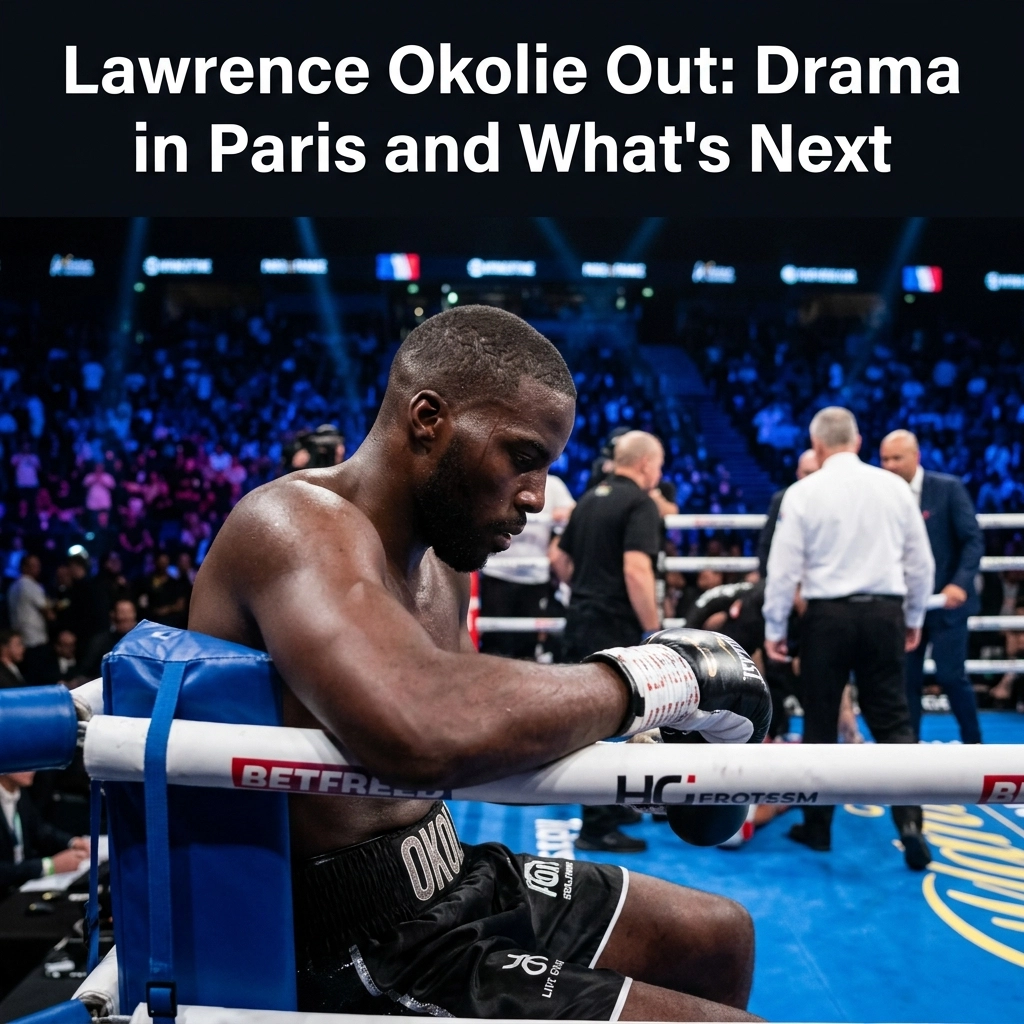
- Lawrence Okolie Out: Drama in Paris and What's Next
The lights were set. The posters were up. Paris was ready for a heavyweight collision that promised to shake the foundations of the division. But in the world of combat sports, the biggest hits don't always happen inside the ring. Sometimes, they land in a laboratory. Lawrence Okolie, the man who was supposed to headline a massive card in the City of Light this Saturday, April 25, is out. The reason? A failed drug test that has sent shockwaves through the industry. The fight against Tony Yoka is dead. The event is canceled. The fallout is only just beginning. The Positive Test: GHRP-2 and the VADA Bomb On Tuesday morning, April 21, the Voluntary Anti-Doping Association (VADA) dropped a nuclear memo on Queensberry Promotions. Lawrence Okolie had tested positive for GHRP-2 and its M8 metabolite. For those not in the know, GHRP-2 is a synthetic substance designed to stimulate the body’s release of human growth hormone. It’s a performance enhancer, plain and simple. The timing couldn’t be worse. We are just days away from the first bell. Frank Warren and the team at Queensberry were initially scrambling to find a late replacement, a British heavyweight brave enough to step into the lion’s den on short notice. But finding a top-tier heavyweight to fight Tony Yoka in his backyard with 72 hours' notice is a fantasy. By the end of the day, the plug was pulled. The event is gone. Fans are holding tickets for a ghost show. The promoters are left counting the losses. This isn't just a postponement; it’s a total shutdown. Lawrence Okolie: From the O2 High to the Paris Low The irony here is thick enough to choke on. Just over two weeks ago, on April 5, Lawrence Okolie was standing in the center of the ring at the O2 Arena, his hand raised in triumph. He had just dismantled Ebenezer Tetteh with a brutal TKO victory. He looked fast. He looked strong. He looked like the natural heir to the heavyweight throne. That win was supposed to be the springboard. It was the confirmation that Okolie’s move from cruiserweight to the land of the giants was the right play. He was ranked No. 1 by the WBC. A world title shot was within touching distance. In the span of seventeen days, he has gone from the most feared contender in the division to a man fighting for his reputation. The swing of the pendulum in boxing is violent. One day you are the hero of the O2; the next, you are the pariah of Paris. To keep up with how fast this landscape changes, you need to stay locked into our boxing news section. The narrative is shifting every hour. The Defense: An Injury or a Mistake? Okolie hasn't stayed silent. He took to social media to offer an explanation that we’ve heard in various forms before, but one that he insists is the truth. According to the Londoner, he sustained a serious bicep injury late last year and followed that up with a nagging elbow injury during this current training camp. His defense is simple: the substance was part of a treatment plan for the injury. He claims he was focused on healing and getting to the ring, and that any investigation will eventually clear his name. He has promised full cooperation with the authorities. Is it a valid excuse? In the eyes of the sanctioning bodies and VADA, "I was just trying to heal" rarely holds up. The rules are binary. The substance is in the system, or it isn't. The clinical side of boxing doesn't care about the "why." It only cares about the "what." Okolie’s hunger to compete may have led to a catastrophic error in judgment. If you want to understand the grit and psychological pressure these athletes face, check out our perspective category for deep dives into the fighter's mindset. Tony Yoka and the Canceled Card Spare a thought for Tony Yoka. The Frenchman was looking for a signature win to revitalize his career on home soil. He did the work. He made the weight. He went through the grind of a camp only to have the rug pulled out from under him at the eleventh hour. For DAZN and Queensberry, this is a nightmare. Organizing an international event of this scale involves millions in logistics, marketing, and broadcast rights. To cancel the entire event suggests that the promoters felt the card couldn't survive without the Okolie name. It's a testament to his star power, but also a reminder of how fragile the boxing business really is. The fallout will be felt across the heavyweight landscape. With Okolie sidelined, the WBC rankings are about to become a shark tank. Contenders who were waiting in the wings are now smelling blood. They see an opening. They see a path to the top that was previously blocked by a 6'5" powerhouse from Hackney. Legacy, Grit, and the Long Road Back What happens next for Lawrence Okolie? If the investigation doesn't go his way, we are looking at a lengthy suspension. In the heavyweight division, time is the one thing you can't get back. At this level, a two-year ban is a career-killer. He was positioning himself for the winners of the massive 2026 clashes, like the Usyk vs. Verhoeven fight. He wanted the big stage, the big lights, and the big checks. Now, he’s in a different kind of fight. A fight against a lab report. A fight against a public perception that has already shifted. The boxing world is unforgiving. It loves a comeback story, but it hates a cheat. Whether Okolie falls into the former or the latter category depends on what happens in the coming weeks. He needs to prove that this was a medical oversight and not a shortcut to greatness. If you’re a fan of the science and the chaos of the heavyweights, you know that nothing is ever certain until the bell rings. This cancellation is a massive blow to the 2026 boxing calendar, but the sport moves on. It always does. New stars will rise, and others will fade into the background. Stay tuned to our industry news for the official statements as they break. We are tracking this story from every angle: from the legal battles to the potential rescheduling. Claim Your Moment Don't let the drama outside the ring distract you from the action inside of it. The fight game is a rollercoaster, and you need to be strapped in. Whether you are looking for the latest MMA results or looking to train like a pro with our guide on toughening your hands, FIGHT.TV is your corner man. Hit the buttons, subscribe to the feed, and don’t miss a single beat of the chaos. The Okolie story is just one chapter in a year that is shaping up to be the wildest in combat sports history. A contender silenced. A city disappointed. A reputation on the line. This is the fight game. No excuses. No mercy.
- Jeff Creighton: The Ultimate Fighter’s Secret Weapon
Jeff Creighton doesn’t just walk into a cage. He invades it. If you’ve been following the combat sports circuit for any length of time, the name "Jazzy" might have rung a few bells, but it’s his recent run on The Ultimate Fighter 33 (TUF 33) that has the entire industry leaning in. Under the guidance of Daniel Cormier on Team Cormier, Creighton has transformed from a regional powerhouse into a legitimate threat to the UFC’s welterweight hierarchy. He isn't your average prospect. He isn't some 21-year-old kid looking for a TikTok moment. With a professional record of 12-2-1, Jeff Creighton is a seasoned vet who has paid his dues in blood and sweat across the toughest gyms in California. He is the definition of a "Secret Weapon." The Negotiation That Caught Dana White’s Eye Most fighters go on TUF and act like they’re lucky to be there. They say the right things. They thank the producers. They hope for a performance bonus. Not Jeff Creighton. During the filming of TUF 33, rumors started swirling about a "five-figure negotiation" incident involving Creighton and the UFC brass. While most fighters would be terrified to talk numbers before even securing a contract, Creighton handled himself like a businessman. He knew his worth. He knew what he brought to the table. Dana White didn't just tolerate it; he loved it. In an industry built on bravado, seeing a fighter who understands the "prize" part of "prizefighting" is rare. It showed grit. It showed a level of self-assurance that most men never find. Dana saw a guy who wasn't just there to participate: he was there to take over. That kind of mental fortitude is what separates the champions from the gatekeepers. Jeff Creighton: Shaking the Earth: The 25-1 Upset To understand the hype behind Creighton, you have to look back at Bellator 293. This was the moment the "Jazzy" legend truly began. The match-makers had him slated against Joey Davis. At the time, Davis was the undefeated golden boy, a wrestling standout who looked destined for a title shot. The betting lines were disrespectful. Creighton opened as a massive 25-1 underdog. People weren't asking if he would lose; they were asking how long he would last. The world was stunned. Creighton didn't just survive; he systematically dismantled the hype train. He used a suffocating pace and a high-level grappling IQ to hand Davis his first-ever loss. The arena went silent. The betting houses took a bath. Creighton walked out with a smile, proving that rankings and odds are just numbers on a screen. Inside the cage, only the grind matters. That victory wasn't a fluke. It was a statement. It told the world that Jeff Creighton is the man who thrives when the lights are brightest and the odds are stacked against him. He is the ultimate spoiler. The San Diego Pedigree: The Arena and Hendo’s You don’t get a 12-2-1 record by accident. You get it by surrounding yourself with killers. Creighton splits his time between two of the most prestigious gyms in the sport: The Arena in San Diego and Dan Henderson’s Athletic Fitness Center. Training at The Arena means working with some of the most technical strikers and grapplers in the world. San Diego is a shark tank. If you aren't evolving, you're getting eaten. Creighton has spent years honing his "Jazzy" style there: a rhythmic, unpredictable approach that leaves opponents swinging at air. Then there’s the Dan Henderson connection. Training under a legend like "Hendo" adds a layer of "old school" toughness that you can't buy. It’s about that grind. It’s about the heavy hands and the wrestling base that can’t be broken. When you combine the technical wizardry of San Diego with the legendary grit of Temecula, you get a fighter who can win in any environment. This dual-gym approach has made Creighton one of the most well-rounded welterweights outside of the top 15. He can out-wrestle the strikers and out-strike the wrestlers. He is a puzzle that nobody has quite figured out yet. Breaking Down the "Jazzy" Style What makes Jeff Creighton so dangerous? It’s the unpredictability. Most fighters have a "tell." You know when they’re going for a takedown. You know when the overhand right is coming. Creighton fights with a cadence that is entirely his own. He uses feints and level changes to keep his opponents guessing. His record of 12-2-1 reflects a fighter who knows how to win rounds and find finishes. He doesn't just chase the knockout; he builds the house brick by brick until the opponent realizes they’re trapped inside. His grappling is his safety net. As seen in his MMA performances , his ability to transition from a striking exchange into a dominant clinch or takedown is elite. He doesn't panic. He stays calm in the chaos. That clinical approach is what Daniel Cormier latched onto during TUF 33. DC knows a world-class wrestler when he sees one, and Creighton’s ability to implement his game plan under pressure is what makes him a "Secret Weapon." The Legacy of the Underdog There is a certain type of respect that only comes to the man who was never supposed to win. Jeff Creighton has built his entire career on that respect. Every time he steps into the cage, he is fighting against the narrative that he’s just a "regional guy." But look at the results. Look at the bodies he’s left behind in various promotions. Whether he’s fighting for regional titles or on a global stage like Bellator or the UFC, the energy remains the same. He is hungry. He is disciplined. He is ready to ruin your parlay. The Welterweight division is currently a shark tank. It requires more than just talent; it requires a psychological edge. Creighton has that in spades. He’s seen the bottom, and he’s clawed his way to the top. When you’ve been a 25-1 underdog, there is nothing an opponent can do to scare you. The fear is gone. Only the mission remains. What’s Next for the Secret Weapon? As The Ultimate Fighter 33 moves toward its conclusion, all eyes are on Team Cormier and their standout welterweight. Creighton isn't just looking for a win; he’s looking for a statement. He wants to prove that his 12-2-1 record isn't just a number: it’s a warning. The "five-figure negotiation" was just the beginning. Jeff "Jazzy" Creighton is here to collect what he’s owed. He has the skills, the pedigree, and the mental toughness to be a mainstay in the UFC. He is the guy that the top contenders don't want to fight because he’s a high-risk, high-reward nightmare. For fans of the sport, Creighton represents the pure essence of MMA. He’s a guy who didn't take the easy road. He didn't have a silver spoon or a massive marketing machine behind him. He did it the hard way. He earned it in the gyms of San Diego and on the mats of Temecula. Stay tuned to FIGHT.TV news for all the latest updates on Jeff’s journey. This isn't just another fighter on a reality show. This is the emergence of a contender who has been hiding in plain sight. The secret is out. Claim Your Moment The fight game waits for no one. Whether you’re watching from the stands or streaming the action live, the intensity never drops. Jeff Creighton knows that every second in that cage is a chance to change his life forever. He’s hitting buttons like a champ and securing his legacy. Are you ready to see what happens next? Whether it's Muay Thai , boxing, or the elite levels of MMA, we bring you the coverage that matters. Don't be the one hearing about the upset the next morning. Be there when the shockwaves hit. Jeff "Jazzy" Creighton is coming for the crown. Are you watching? A star is rising. A division is warned.
- Braian Suarez vs. Ben Whittaker: A Short Night in Liverpool
Liverpool didn’t just host a boxing match on Saturday night. It hosted a statement. When Braian Suarez stepped into the ring at the Liverpool Arena on April 18, 2026, the air was thick with the kind of tension you only get when a certified "boogeyman" meets a rising superstar. Suarez, the Argentinian wrecking ball with a 95% knockout rate, wasn't there to dance. He was there to turn the lights out. But Ben Whittaker had other plans. In a night that was supposed to be a grueling test of wills, we got a clinical execution instead. Two minutes and twenty-four seconds. That’s all it took. One massive overhand right from Whittaker ended the night early, leaving the crowd stunned and the light heavyweight division on high alert. If you missed the live boxing stream , you missed one of the most savage snapshots of the year. The Menacing Power of Braian Suarez Let’s talk about Braian Suarez for a second. You don’t get a 95% KO rate by accident. Before Saturday night, Suarez was the guy nobody wanted to see on the other side of the contractual papers. He walks into the ring with a record that reads like a horror movie for his opponents. 21 wins, 20 of them coming via stoppage. That is terrifying math for anyone with a chin. Suarez is the definition of a high-risk, high-reward opponent. He represents the old-school grit of Argentinian boxing: heavy hands, iron resolve, and a total disregard for the "sweet science" if he can just land one clean shot. He doesn't need to win rounds. He just needs to win a moment. Going into the Liverpool Arena, the narrative was simple: Could Whittaker’s flash and movement survive the raw, unadulterated power of Suarez? Even in defeat, you cannot look past a guy like Suarez. He’s a dangerous power puncher who remains a threat to anyone in the top fifteen. One loss doesn't erase the dynamite in his gloves. For fans checking the boxing schedule tonight , Suarez is still a name that guarantees excitement. He’s the kind of fighter who makes you sit on the edge of your seat because you know the fight could end at any millisecond. The Showman’s Trap Ben Whittaker is a different breed. The 2020 Olympic silver medalist has spent his pro career perfecting the art of the "Matrix." He’s flashy. He’s arrogant. He’s incredibly hard to hit. But critics always asked: What happens when he gets cornered by a real puncher? Suarez was supposed to be that answer. Whittaker was elevated to the main event after Callum Smith had to withdraw, and the pressure was on. The Liverpool crowd is educated. They don't just want showmanship; they want results. Whittaker gave them both. From the opening bell, Whittaker didn't just move; he dictated. He used his jab like a rangefinder, measuring the distance while Suarez tried to close the gap. Suarez looked heavy, poised to unload one of those signature Argentinian hooks. But Whittaker’s footwork made the ring feel like an ocean, and Suarez was drowning in space. 2:24 of Chaos The end came with a suddenness that felt like a physical jolt to everyone in the building. Whittaker established a rhythm, teasing Suarez, dropping his hands, and daring the powerhouse to throw. It was a psychological trap. Suarez, hungry to land that 96th-percentile knockout blow, bit on the bait. Whittaker planted a left hand to the body: a decoy that forced Suarez to drop his guard by just a fraction of an inch. That’s all the space Whittaker needed. He launched a massive overhand right that tracked like a heat-seeking missile. It landed flush. The sound of the impact echoed through the arena. Suarez hit the canvas hard. He beat the count, showing the heart that has defined his career, but his legs were gone. Referee Steve Gray looked into Suarez's eyes and saw nobody home. The fight was waved off at the 2:24 mark of the very first round. Just like that, a "short night in Liverpool" became the headline. The Aftermath and the Controversy After the referee stopped the fight, the Suarez corner wasn't happy. Suarez himself gestured to the back of his head, suggesting the knockout blow was illegal. But the replays told a different story. It was a clean, looping overhand right that caught him right on the temple. It wasn't a foul; it was a masterpiece of timing. For Whittaker, this was his second straight first-round knockout. He’s moving from "prospect" to "problem" at light speed. His record now sits at 11-0-1 with 8 KOs. More importantly, he’s proved that he has the power to match the pageantry. He isn't just dancing; he’s finishing. If you’re looking for the latest gear to represent your love for the sport, check out our apparel and hats . We’re all about that fight life, and nothing says you’re a fan like the right kit. What’s Next for the Heavy Hitters? Whittaker is headed to the Big Apple. Matchroom has already confirmed his US debut for June 27 at the Barclays Center in Brooklyn. He’ll be on the Jaron Ennis vs. Xander Zayas undercard, a stage perfectly suited for his brand of "showtime" boxing. New York loves a character, and Whittaker is exactly that. As for Braian Suarez, the road back starts now. He remains one of the most dangerous out-of-nowhere punchers in the world. He’ll go back to Argentina, lick his wounds, and wait for the next call. There are plenty of contenders who would still be terrified to step in with him. One night in Liverpool doesn't change the fact that Suarez is a man who can end a career with one punch. For those who want to watch boxing online , staying updated on these stories is vital. The landscape changes every single weekend. You can follow all the deep dives and industry shifts in our news section or get a different take in our perspective category . Why We Love This Sport Saturday was a reminder of why we tune in. You can have the best game plan, the most terrifying knockout percentage, and a lifetime of grit, but in boxing, it only takes one second for it all to vanish. Suarez brought the power; Whittaker brought the precision. Precision won this time. The light heavyweight division is currently a shark tank. With guys like Bivol and Beterbiev sitting at the top, the climb for someone like Whittaker is steep. But performances like this make you wonder just how high the ceiling is. And for Suarez? He’s the gatekeeper that no one wants to fight. He’s the ultimate test of chin and courage. If you’re a collector, don’t forget to peek at our limited drops and posters . We keep the history of these fights alive through exclusive merchandise that hits as hard as a Whittaker right hand. The Final Word Liverpool was a short night, but the impact will last all year. Ben Whittaker is the real deal, and Braian Suarez remains a terrifying threat to anyone who thinks they can just walk through his power. Whether you’re looking for a live boxing stream of the next big event or checking the boxing schedule tonight to see who’s up next, FIGHT.TV is your home for the chaos and the science of the ring. Suarez will be back. Whittaker is moving on. The light heavyweight division just got a whole lot more interesting. A star is rising. A veteran is hungry. The fight continues.
- Alexander Jiménez Ascends: Claims WBC World Youth Title
Alexander Jiménez Ascends: Claims WBC World Youth Title This past Saturday, April 18, the state of Falcón established itself as the epicenter of Venezuelan boxing. Local blue-chip prospect Alexander Jiménez secured a hard-fought majority decision victory to crown himself the new WBC World Youth Featherweight Champion. In doing so, Jiménez settled the score in a high-stakes rematch against compatriot Antony González, handing González the first blemish on his professional record. The bout served as the main event of a card hosted by the rising outfit KO Boxing Promotions, staged at the "Carlos Sánchez" Indoor Gym within Coro’s Sports City. The night’s success was doubled for the local crowd as José “Satu” Noguera captured the national bantamweight title in the co-feature, ending his night early with a clinical knockout. Fight Synopsis: Pressure Overcomes Pedigree From the opening bell, Jiménez dictated the terms of the engagement. Utilizing a high-volume offense and relentless aggression, the local favorite stalked González across the canvas for the better part of the night. González, conversely, struggled to find his rhythm, appearing uncharacteristically stagnant and, at several junctures, simply overwhelmed by Jiménez’s pace. Capitalizing on the energy of the home crowd and superior conditioning, Jiménez maintained his composure even when González threatened with dangerous, looping overhands. While González showed flashes of power, he was frequently out of range and appeared physically depleted in the later rounds, unable to stem the tide of Jiménez’s onslaught. The Rise of Alexander Jiménez The 21-year-old Falcón native improves his unblemished record to 13-0-1 with 8 KOs, signaling his arrival as a serious threat in the featherweight division. This title victory caps off a dominant momentum shift for Jiménez, who just last month scored a devastating first-round stoppage against Marlembron Acuña in La Guaira. Jiménez’s path to the green belt has been a masterclass in activity. After a technical draw against González in 2025, he reeled off a string of victories: a quick knockout of Eydeiman Peláez, a disciplined unanimous decision over Ángel Guedez to claim national honors, and a first-round blitzing of Beiker Guevara. With the WBC Youth title now around his waist, the ceiling for the young Venezuelan has never looked higher. If you enjoyed this article be sure to sign up for free on FIGHT.TV to get all the latest and greatest news!
- Captain Canada Rules Winnipeg: Mike Malott's KO Win Retires Gilbert Burns
Winnipeg didn’t just host a fight night on April 18. It hosted a coronation. In front of a deafening hometown crowd, Mike Malott: the man they call "Captain Canada": did the unthinkable. He didn't just beat a legend. He retired one. The energy inside the Canada Life Centre was vibrating long before the main card even started. Fans were draped in maple leafs, chanting "Malott" until their throats were raw. They came to see if their golden boy was the real deal. They got their answer in the third round when Malott sent Gilbert "Durinho" Burns into the shadow realm, effectively ending the career of one of the most respected warriors in the sport. If you missed the live fight stream , you missed the loudest roar in Canadian MMA history. The Stakes: A Changing of the Guard Heading into this matchup, the narrative was clear. Mike Malott was the surging prospect with a 100% finish rate in the UFC. Gilbert Burns was the battle-tested veteran trying to prove he still belonged at the top of the mountain. Burns had been through wars with the likes of Kamaru Usman and Khamzat Chimaev. He was the ultimate litmus test for anyone claiming to be a contender. For Malott, this was everything. A win over Burns wouldn't just move him up the rankings; it would prove that Canada finally has another world-class threat at 170 pounds. The pressure was suffocating, but Captain Canada looked like the coolest man in the building. For the latest mma news and results , everyone knew this was a "win or go home" moment for Burns. At 39, the Brazilian legend was on a tough skid. He needed a vintage performance to keep the dream alive. Round 1: Tactical Warfare The first five minutes were a high-stakes chess match played at 100 miles per hour. Malott used his massive reach advantage to keep Burns on the outside. He peppered the veteran with stiff jabs and heavy calf kicks that echoed through the arena. Burns, ever the professional, stayed patient. He looked for the explosive double-leg takedown that has served him so well over the years. Every time Burns lunged, Malott’s footwork was perfect. He circled out, reset, and went right back to the jab. It was a masterclass in distance management. There was a moment halfway through the round where Burns landed a clean overhand right that seemed to wake Malott up. The Canadian didn't blink. He ate it, reset, and landed a three-punch combination that forced Burns to respect the power coming back his way. It was clear right then: Malott wasn't intimidated by the legend standing across from him. Round 2: The Gritty Middle The second round was where the grit came out. Burns started to find his rhythm, timing Malott’s entries and looking to turn the fight into a grappling match. He managed to press Malott against the fence, digging for underhooks and trying to drag the hometown hero into deep waters. This is where Malott proved he’s more than just a striker. His takedown defense was elite. He stayed heavy, utilized the cage to stay upright, and even managed to land some nasty short elbows in the clinch. The crowd was living and dying with every exchange. By the end of the second, both men were wearing the damage. Burns had a significant knot over his left eye, and Malott was breathing a bit harder. The tension was thick enough to cut with a knife. It felt like a finish was coming. You could sense it in the way the rhythm of the fight changed. The pace was picking up, and someone was going to break. The Finish: Captain Canada’s Moment The third round started with a bang. Malott came out aggressive, smelling blood. He wasn't content with a decision win on home soil. He wanted the statement. About two minutes into the round, Malott caught Burns leaning. He threw a feint jab followed by a devastating right cross that landed flush on the chin. Burns’ legs buckled. The Brazilian tried to recover, diving for a desperate single-leg, but Malott was already there. Malott stuffed the shot, transitioned to the back, and unloaded a barrage of ground-and-pound. The referee was watching closely as Malott landed hammerfist after hammerfist. Burns wasn't defending intelligently. It was over. The ref stepped in at 2:08 of the third round. The Canada Life Centre exploded. Mike Malott had just secured a knockout victory over a former title challenger. A star wasn't just born: it was launched into orbit. The End of an Era: Gilbert Burns Retires As the dust settled and Malott began his celebration, the mood in the cage shifted. Gilbert Burns didn't get up immediately. When he did, he didn't look for his coaches. He looked at the floor, took off his gloves, and placed them in the center of the Octagon. The retirement of Gilbert Burns is a massive blow to the heart of the MMA community. "Durinho" has been a staple of the welterweight division for years. He was the guy who would fight anyone, anywhere, at any time. His willingness to face the boogeymen of the division made him a fan favorite worldwide. In his post-fight interview, Burns was emotional. "I’ve given my life to this sport," he said through a translator. "But the young lions are here. My body is telling me it’s time. I want to thank the fans, the UFC, and my family. It’s been an incredible ride." Seeing a legend walk away is always tough, but doing it after a fight like that: against a talent like Malott: feels right. It was a passing of the torch. Burns went out on his shield, fighting a top-tier opponent in a hostile environment. That is exactly who Gilbert Burns is. Malott’s Ascent: What’s Next? With this win, Mike Malott isn't just a Canadian prospect anymore. He’s a legitimate contender in the deepest division in the sport. He showed he has the striking to hurt the best, the grappling to survive the elite, and the gas tank to finish the job late. The welterweight landscape is shifting. With guys like Leon Edwards, Shavkat Rakhmonov, and Jack Della Maddalena at the top, Malott has plenty of high-profile options for his next outing. A fight against someone in the top five is inevitable. "I want the belt," Malott told the crowd during his victory speech. "I’m not here to be a participant. I’m here to bring that gold back to Canada. This is just the beginning." If you want to keep up with Malott’s journey and all the latest combat sports streaming updates, you need to stay locked into FIGHT.TV. We are the home for everything that hits hard. Why You Need to Watch MMA Online Fights like Malott vs. Burns are why we love this sport. The drama, the stakes, the raw emotion of a retirement: you can't find this anywhere else. Whether you're a hardcore fan or just getting into it, the best way to experience it is to watch mma online . Gone are the days of missing the big moments because you weren't near a TV. With modern streaming, you can catch every jab, every knockout, and every post-fight speech from your phone, tablet, or laptop. Don't be the person hearing about the "KO of the Year" the next morning. Be the person who saw it happen live. Final Thoughts: The Future of Canadian MMA For a long time, Canadian fans have been looking for the successor to Georges St-Pierre. While comparing anyone to GSP is a tall order, Mike Malott is the closest thing we’ve seen to a true homegrown superstar in a long time. He has the look, the skill, and the personality to lead the charge for a new generation of Canadian fighters. Winnipeg was a reminder that the Great White North is still a powerhouse in the fight world. The atmosphere was legendary, the performance was clinical, and the respect shown to Gilbert Burns was class personified. The King of the North has arrived. And he’s just getting started. For more news and deep dives into the world of MMA, keep it locked right here. We’ve got the breakdowns, the results, and the perspective you won't find anywhere else. Claim your moment. Join the conversation. Hit those buttons like a champ and make sure you’re subscribed for the next big card. The Octagon never sleeps, and neither do we.
- Marguerite vs. Álvarez: WBC Youth World Title Set for Paris Clash
Marguerite vs. Álvarez: WBC Youth World Title Set for Paris Clash The stakes just got higher for the upcoming card at the Adidas Arena. It was officially confirmed moments ago that the WBC Youth World Super Welterweight Title will be on the line Saturday, April 25, in Paris. The undefeated Frenchman and reigning champion, Enzo Marguerite, is set to defend his strap against the heavy-handed Venezuelan challenger, Jeremy Alvarez. This 8-round championship bout serves as a high-stakes attraction on a stacked DAZN-televised card. The event is headlined by a crossroads clash between unbeaten prospects Bakary Samake (19-0) and Ermal Hadribeaj (22-0-1), along with a heavyweight crossroads fight featuring Lawrence Okolie (23-1) against local Olympic gold medalist Tony Yoka (15-3). Tale of the Tape: Enzo Marguerite The pride of Louviers, Eure, Enzo Marguerite, returns to the squared circle for his second outing of the year. The 23-year-old captured the green and gold youth belt back in March, outpointing Mexico’s Oswaldo Gonzalez Huerta (7-2) over the distance. Marguerite rode a wave of momentum through late 2025, securing unanimous decision victories over Venezuelan veteran Luis Enrique Romero in December and Georgia’s Levani Iankoshvili in November. While Marguerite (9-0, 3 KOs) boasts a pristine record and the home-field advantage, his 33% knockout ratio suggests a tactical approach rather than raw power. This defense represents perhaps the most dangerous stylistic puzzle he has had to solve in his young professional career. The Challenger: Jeremy Álvarez Fighting out of Caracas, Venezuela, Jeremy Alexander Álvarez steps into the ring looking to shake off nearly ten months of ring rust. He was last seen in August, where he delivered a dominant second-round demolition of Asdrubal Gonzalez at the iconic Poliedro de Caracas. Alvarez’s recent form has been a rollercoaster of high-level experience. While he suffered a unanimous decision loss to Finland’s Hajji Muhis at the Saudi Arabian Grand Prix in early 2025, his 2024 campaign was a showcase of pure violence. He notched a KO over the grizzled Pedro Verdu and followed up with consecutive stoppage wins over Derwin Medina and Benito Suarez. His only other blemish was a controversial split-decision loss to Leonardo Sanchez (20-1-1), a fight many observers felt he deserved to win. At 22 years old, Alvarez (12-2, 12 KOs) is the definition of a "puncher." With a 100% knockout rate in his victories, he possesses the kind of equalizer that can end a fight in a split second. For the Venezuelan, this isn't just a fight; it’s a career-defining opportunity to crash the rankings of a shark-infested 154-pound division. If you enjoyed this article be sure to sign up for free on FIGHT.TV to get all the latest and greatest news!